
Attic Insulation Dallas: The Complete Homeowner’s Guide to Cutting Energy Bills in North Texas
Meta description: Learn how attic insulation in Dallas reduces energy bills, improves comfort, and supports healthier air. Compare materials, costs, R-values, and upgrades.
Suggested URL slug: /attic-insulation-dallas-guide/
If your Dallas home has hot upstairs rooms, cold floors, or rising utility bills, the right attic insulation Dallas upgrade can make a noticeable difference. North Texas homes face intense summer heat, sudden winter freezes, and long cooling seasons. A properly designed insulation system helps your HVAC equipment work less, keeps rooms more comfortable, and may reduce energy costs by up to 40% in the right conditions.
This guide explains R-values, insulation materials, air sealing, removal, radiant barriers, pricing, and how to choose a qualified insulation contractor.
Why Attic Insulation Dallas Homeowners Need for North Texas Weather
Dallas-Fort Worth attics can reach 130–150°F during a 105°F summer day. That heat radiates through the ceiling, forcing your air conditioner to run longer. During ice storm winters, inadequate insulation allows indoor heat to escape through the attic.
The result is familiar to many homeowners in Dallas, Fort Worth, Frisco, McKinney, Plano, Allen, Prosper, Celina, Denton, Arlington, Garland, Irving, Richardson, Carrollton, Grand Prairie, and Lewisville:
- Uneven room temperatures
- Hot second floors
- High summer utility bills
- Cold ceilings or floors in winter
- HVAC systems that run almost constantly
- Drafts and uncomfortable bedrooms
Effective attic insulation slows heat transfer. However, insulation works best as part of a complete building-envelope strategy that also addresses air leaks, moisture, ventilation, and ductwork.

What R-Value Should Your Dallas Attic Have?
For most DFW homes, R-38 is a practical minimum target, while R-49 to R-60 is often recommended for improved long-term efficiency. Exact requirements can vary by city, construction type, and the current building code, so confirm requirements with your contractor or local building department.
To check your existing attic:
- Look for the lowest areas of insulation.
- Measure the average depth with a ruler.
- Check for exposed ceiling joists.
- Look for compressed, damp, or uneven material.
- Note insulation around the attic hatch, recessed lights, plumbing, and duct penetrations.
As a rough estimate, many loose-fill materials provide approximately R-3 per inch. For example, 10 inches may provide approximately R-30, depending on the material and installation quality. Do not judge performance by depth alone. Gaps, compression, moisture, and air leakage can significantly reduce effectiveness.
Comparing Attic Insulation Materials
The best material depends on your attic design, budget, existing insulation, and comfort goals.
Blown-in cellulose
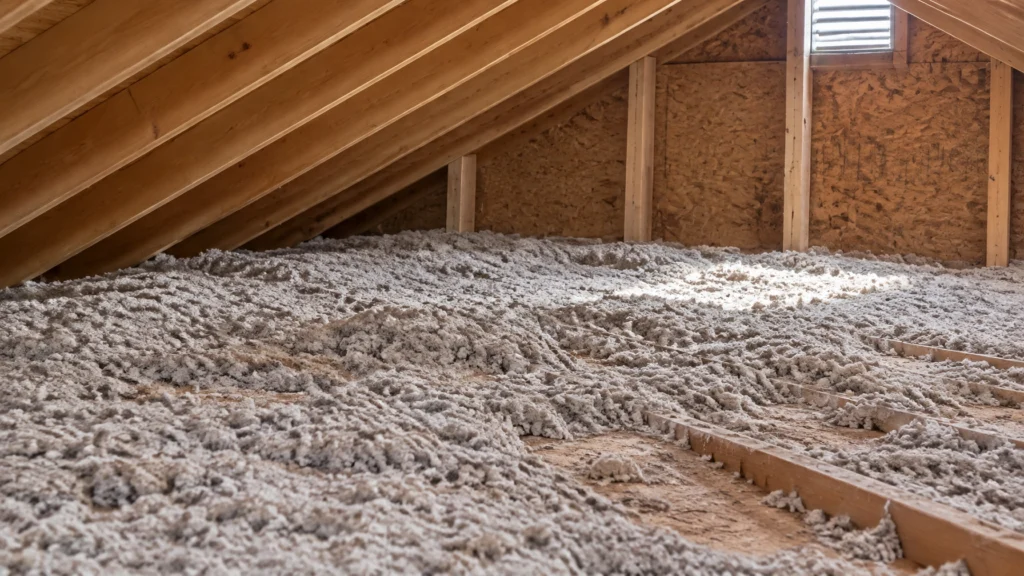
Cellulose works well on attic floors and in retrofit projects. It offers consistent coverage around joists and penetrations and is often made with recycled content. It can be an excellent option for homeowners seeking cost-effective energy efficient insulation Dallas solutions.
Fiberglass
Blown-in fiberglass is lightweight and widely used for attic top-offs. Fiberglass batts can perform well in new construction when installed tightly and without compression. Poorly fitted batts, however, leave gaps that reduce real-world performance.
Open-cell spray foam
Open-cell spray foam is commonly applied to the underside of the roof deck. It expands into irregular spaces and helps create a strong air seal. It has a lower R-value per inch than closed-cell foam but can be a practical choice for creating a sealed attic around HVAC equipment and ductwork.
Closed-cell spray foam
Closed-cell spray foam provides a high R-value per inch and forms a dense air barrier. It is useful where space is limited, around complex roof assemblies, or where additional moisture resistance is important. Proper thickness, ventilation design, fire protection, and professional installation are essential.
Spray foam is not automatically the right answer for every attic. A qualified contractor should evaluate the roof deck, existing insulation, ductwork, ventilation, and moisture conditions before recommending it.
Consider Wall and Attic Insulation Together
Upgrading the attic may improve comfort, but older homes can still have poorly insulated walls. Many properties built in earlier decades have empty or underfilled wall cavities.
A drill-and-fill installation adds insulation through small access holes in the exterior or interior walls. This approach can improve rooms that remain hot or cold even after an attic upgrade. It is especially useful for older homes in Oak Cliff, East Dallas, Garland, Irving, and surrounding neighborhoods.
A complete wall and attic insulation plan can reduce temperature swings throughout the home rather than treating only the ceiling.

Insulation Replacement or Top-Off: Which Do You Need?
A top-off adds new insulation over existing material. It may be appropriate when the current insulation is clean, dry, evenly distributed, and free of contamination.
Full insulation replacement is usually the better choice when you find:
- Visible ceiling joists
- Settled or severely compressed insulation
- Rodent droppings, nesting, or strong odors
- Moisture damage or suspected mold
- Fire, smoke, or water damage
- Excessive dust or debris
- Persistent hot rooms despite adequate insulation depth
Old insulation can affect indoor air quality when it contains pest waste, moisture damage, or accumulated debris. It can also provide clues to pest entry points around roof penetrations and soffits. Removing contaminated material allows the contractor to inspect, clean, and address those openings before installing new insulation.
If you plan to install spray foam, removal may be necessary first. Spraying over damaged, wet, contaminated, or heavily settled insulation can hide problems and prevent proper adhesion. The safer system is:
Removal + Replacement + Air Sealing + Radiant Barrier
That sequence creates a cleaner foundation and helps each upgrade perform as intended.
Why Air Sealing Comes Before New Insulation
Insulation slows conduction, or heat moving through materials. Air sealing stops convection, which occurs when air moves through gaps and carries heat, moisture, dust, and odors with it.
Common DFW attic leakage points include:
- Plumbing and electrical penetrations
- HVAC and duct openings
- Attic hatches
- Top plates and wall cavities
- Recessed lights
- Chimney and flue areas
- Open chases around walls and mechanical systems
Professional air sealing contractors use appropriate caulks, sealants, and expanding foams for each location. Air sealing should generally occur before new insulation is installed so leaks are accessible and the new material is not disturbed.
For older or contaminated attics, the complete process should include removal, cleaning, targeted pest-entry repairs, air sealing, insulation replacement, and a final inspection.
Radiant Barriers and Solar Attic Ventilation
A radiant barrier reflects radiant heat away from the attic rather than replacing traditional insulation. It works best when installed with an air space and combined with adequate R-value.
Solar attic ventilation can help exhaust accumulated heat when properly sized and installed. However, ventilation should not be used to compensate for missing insulation or major air leaks. A professional should review soffit, ridge, and roof ventilation together to avoid creating moisture problems.
A coordinated insulation, air-sealing, radiant-barrier, and ventilation plan is more reliable than adding one product without addressing the rest of the attic.
2026 Dallas Attic Insulation Costs and Potential ROI
Actual pricing depends on attic size, access, material, removal, contamination, air sealing, and the target R-value. Typical 2026 DFW ranges include:
- Blown-in fiberglass: approximately $1.00–$1.80 per square foot
- Blown-in cellulose: approximately $1.20–$2.20 per square foot
- Higher R-value upgrades: approximately $1.50–$3.50 per square foot
- Open-cell spray foam: approximately $2,000–$5,000 for many attic projects
- Full removal and replacement projects: commonly $1,500–$4,500 or more
Homeowners may save approximately $600–$1,200 annually, depending on the home’s starting condition, HVAC efficiency, air leakage, and insulation system. Some projects may deliver a three- to seven-year payback, but no contractor can guarantee identical savings for every property.
Ask for a written scope that separates removal, air sealing, insulation, radiant barrier, ventilation, cleanup, and warranty coverage.
How to Vet Attic Insulation Companies Dallas Homeowners Can Trust
When comparing attic insulation companies Dallas residents can hire, look for:
- BPI-certified installers
- Licensed and insured operations
- A documented target R-value
- Clear material specifications
- Written removal and disposal details
- Air sealing included in the scope
- GREENGUARD Indoor Air Quality Certified products
- Premium materials from established manufacturers
- A workmanship and manufacturer warranty
- Photos or measurements documenting completed coverage
Excellence Home Insulation has more than 15 years of experience and over 2,500 completed projects across Dallas, Collin, Denton, Tarrant, Kaufman, and Ellis counties. Our BPI-certified installers provide same-day assessments for homes, businesses, new construction, and renovation projects. Learn more about our DFW insulation services or review our attic insulation service.
Frequently Asked Questions
How often should attic insulation be replaced?
There is no universal replacement schedule. Replace or upgrade insulation when it is contaminated, wet, damaged, severely settled, or no longer provides adequate coverage.
Is spray foam better than blown-in insulation?
Neither is best for every home. Blown-in insulation is often a cost-effective choice for attic floors. Spray foam is useful for air sealing, complex assemblies, and sealed attic designs when properly specified.
Should old insulation be removed before spray foam?
Often, yes. Damaged, contaminated, or heavily settled insulation should be removed before spray foam installation. This allows the contractor to inspect the roof deck, address pests and moisture, and create a clean installation surface.
Can insulation improve indoor air quality?
It can help when paired with air sealing and removal of contaminated materials. Old insulation containing pest waste, moisture damage, or excessive debris may contribute to indoor air concerns.
What does attic insulation cost in Dallas, TX?
Many projects fall between $1,500 and $4,500, while spray foam, extensive removal, and larger homes may cost more. Request an inspection for a property-specific estimate.
Improve Your Dallas Home’s Comfort and Efficiency
The right attic insulation Dallas solution is more than adding material to the attic floor. It is a tailored system that may include inspection, removal, pest-related cleanup, air sealing, insulation replacement, radiant barriers, and ventilation improvements.
Ready to reduce energy waste and make your home more comfortable? Request a free insulation estimate from Excellence Home Insulation or call (972) 552-0200 to schedule your same-day assessment.


