
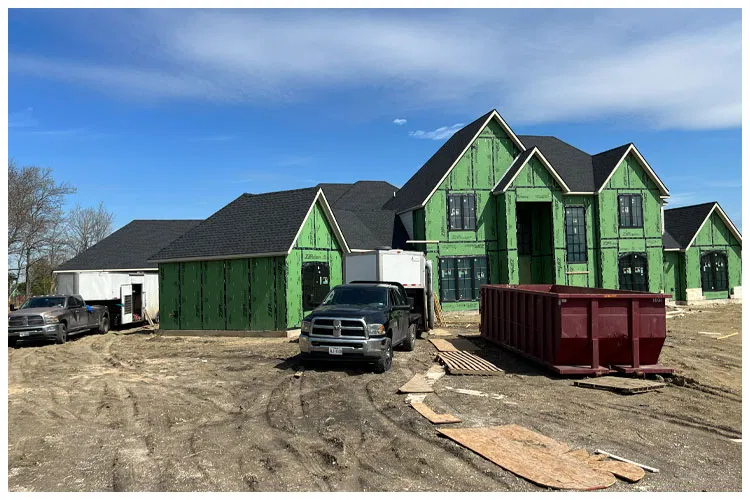
Insulation Contractors Dallas Builders Rely On: Why Your Next DFW New Construction Project Needs a BPI-Certified Partner
Meta description: Insulation contractors Dallas builders trust for code-ready new construction, air sealing, HERS support, and reliable scheduling across the DFW Metroplex.
Suggested URL slug: /insulation-contractors-dallas-new-construction-builders
For builders, insulation is not simply another line item. It is a critical-path trade that affects drywall, inspections, blower door results, punch lists, buyer expectations, and closing dates. The right insulation contractors Dallas builders choose can help keep a project moving while delivering the energy performance North Texas buyers expect.
Excellence Home Insulation works with general contractors, custom home builders, production builders, and developers across the Dallas-Fort Worth Metroplex. Our BPI-certified installers coordinate with jobsite teams, energy raters, HVAC contractors, electricians, and plumbers to install clean, consistent insulation systems built for the DFW climate.
Why Insulation Is a Schedule Risk on DFW Builds
A missed insulation date can create a domino effect:
- Drywall cannot begin on schedule.
- Pre-drywall inspections may be delayed.
- Blower door and HERS testing can uncover expensive rework.
- Punch lists grow when penetrations and air leaks are not addressed.
- Final inspections and closings may move back.
- Buyers may question the home’s comfort and projected energy costs.
This risk is especially important in fast-growth corridors such as Frisco, Prosper, Celina, Anna, Melissa, Princeton, Little Elm, and Argyle. The same challenge exists in south and east growth markets, including Midlothian, Waxahachie, Forney, and Royse City.
A reliable insulation subcontractor should provide more than materials and labor. Builders need dependable lead times, documented installation practices, consistent crews, and the ability to return quickly if a project requires corrections.
What to Specify for the North Texas Climate
DFW homes must perform through 105-degree summers, extended cooling seasons, sudden winter freezes, and occasional ice storms. An insulation package should be selected around the entire building envelope, not just the attic.
For many new construction projects, builders evaluate:
- Attic and ceiling insulation: R-38 to R-49 or higher, depending on the assembly, energy model, and local requirements.
- Above-grade walls: Fiberglass, blown-in, spray foam, or hybrid assemblies designed to meet the specified cavity and continuous insulation values.
- Floors over garages or unconditioned spaces: Properly insulated and air sealed to prevent cold floors and comfort complaints.
- Conditioned attics: Spray foam at the roof deck, with HVAC and ductwork inside the thermal envelope.
- Vented attics: Blown-in fiberglass, cellulose, or fiberglass batts at the ceiling plane, combined with thorough air sealing.
- Mechanical penetrations: Sealed around plumbing, electrical, HVAC, recessed lighting, top plates, chases, and other openings.
The 2021 IECC and local amendments can affect required R-values, air leakage limits, and compliance pathways. DFW builders should confirm the adopted requirements for each municipality and coordinate insulation specifications with the project’s designer and HERS rater.
R-Value Is Only Part of the Performance Equation
A high R-value does not guarantee a high-performing home if the insulation is compressed, uneven, missing, or installed around unsealed penetrations. Builders need both thermal resistance and continuity.
That is why home insulation Dallas projects should include a clear air-sealing scope before the insulation crew closes the walls and attic assemblies.

New Construction Insulation Options Builders Should Compare
Every project has different specifications, elevations, budgets, and energy targets. The most common options include:
Spray Foam Insulation
Spray foam insulation Dallas builders use can be installed as open-cell, closed-cell, or a flash-and-batt hybrid.
- Open-cell spray foam expands significantly and works well for many roof deck and wall applications.
- Closed-cell spray foam provides greater density, moisture resistance, and R-value per inch.
- Flash-and-batt systems combine a layer of spray foam for air sealing with fiberglass or another insulation product for cost control.
Spray foam can be a strong choice for conditioned attics, complicated rooflines, vaulted ceilings, and assemblies where air control is a priority. The correct product and thickness should follow the project specifications and energy model.
Blown-In Fiberglass and Cellulose
Blown in insulation Dallas builders specify for attic floors and selected wall assemblies can provide consistent coverage when installed to the correct density and depth. Blown-in systems are useful for production homes and large-scale projects because they can be installed efficiently across repeated floor plans.
Cellulose can also support sound control and recycled-content goals. Fiberglass is lightweight, durable, and widely used in attic and wall applications.
Fiberglass Batts
Fiberglass batts remain a practical option for standard wall cavities, floors, and ceilings. They require careful cutting and fitting around wiring, plumbing, outlets, and other obstructions. Gaps and compression can reduce performance, so inspection and installation quality matter.
Rigid Board and Hybrid Assemblies
Rigid board may be used as continuous insulation, thermal bridging control, or part of a specialty wall assembly. It must be coordinated with framing, sheathing, flashing, and the project’s water-management details.
Drill-and-Fill for Existing Structures
Drill-and-fill is generally a retrofit solution rather than a new construction method. It is useful when working on additions, historic structures, or existing walls that require insulation upgrades without removing the finished interior. For older properties, it may be part of a broader attic insulation replacement or envelope improvement project.
Air Sealing Protects the Blower Door Result
Insulation and air sealing work together, but they are not the same task. Air can move through gaps around top plates, plumbing penetrations, electrical boxes, HVAC chases, attic access panels, and framing transitions even when the surrounding cavities contain insulation.
Before insulation is installed, the crew should identify and seal leakage paths that could affect the blower door result. This helps protect the home’s HERS performance and reduces the chance of expensive re-testing.
A coordinated process typically includes:
- Review the insulation plans and energy model.
- Walk the framing with the builder or superintendent.
- Seal major penetrations and framing transitions.
- Install insulation to the specified depth and density.
- Complete a pre-drywall inspection.
- Support the builder and HERS rater with corrections if testing identifies leakage.
The 2021 IECC often places significant emphasis on air leakage performance, with many Climate Zone 3 projects working toward an air leakage limit around 3 ACH50. The exact requirement depends on the adopted code and compliance path.

Trade Coordination and Jobsite Sequencing
The insulation contractor should fit into the builder’s schedule, not disrupt it. Before the crew arrives, the jobsite should be ready for installation:
- Rough-in work is substantially complete.
- HVAC, plumbing, and electrical penetrations are visible.
- Exterior doors and windows are installed or appropriately protected.
- Attic access is clear.
- The superintendent has confirmed the insulation scope.
- Required inspections are scheduled.
- The home is ready for pre-drywall review.
Our teams coordinate with builders on installation timing, access, material delivery, and cleanup. Consistent crew scheduling and repeatable specifications are especially important for production builders using multiple floor plans or communities.
A Trade Partner Built for DFW Builders
Excellence Home Insulation brings more than 15 years of field experience and more than 2,500 completed projects to residential and commercial construction.
Builders work with us for:
- BPI-certified installers
- Licensed and insured operations
- Same-day assessments when project timing requires fast answers
- Batch pricing for repeated specifications and community builds
- Premium materials from trusted manufacturers, including Johns Manville, CertainTeed, and FI-Foil
- GREENGUARD Indoor Air Quality Certified product options
- Clean, safety-conscious jobsites
- Warranty support for the builder and the builder’s buyers
- Practical coordination with HERS raters and other trades
We provide residential insulation Dallas builders can specify for custom homes, production communities, additions, multifamily projects, and commercial properties.
Our service area includes Dallas, Fort Worth, Frisco, McKinney, Plano, Allen, Prosper, Celina, Denton, Arlington, Garland, Irving, Richardson, Carrollton, Coppell, Flower Mound, Grapevine, Lewisville, The Colony, Little Elm, Princeton, Anna, Melissa, Sherman, Rockwall, Forney, Midlothian, Waxahachie, Ennis, Kaufman, Royse City, Seagoville, Cedar Hill, DeSoto, Grand Prairie, Burleson, Mansfield, Southlake, Colleyville, Westlake, Argyle, and Trophy Club.
We serve builders across Dallas, Collin, Denton, Tarrant, Kaufman, and Ellis counties.
Builder FAQ
When should insulation be installed on a new construction project?
Insulation is typically installed after rough-in work is complete and before drywall. The precise date should be coordinated with the superintendent, pre-drywall inspector, and HERS rater.
Can one insulation contractor handle multiple communities or floor plans?
Yes. A qualified trade partner should be able to standardize specifications, coordinate recurring schedules, support batch pricing, and document installations across multiple homes.
Do builders need spray foam on every new home?
No. Spray foam is valuable for certain rooflines, conditioned attics, and air-sealing requirements, but blown-in fiberglass, cellulose, fiberglass batts, rigid board, and hybrid assemblies may be more appropriate for other designs.
How does insulation affect HERS testing?
Insulation affects the home’s modeled efficiency, thermal performance, and air leakage results. Missing insulation, inconsistent coverage, and unsealed penetrations can lead to lower performance and costly rework.
Can you review our plans before bidding?
Yes. A plan and specification review can help identify the best insulation approach, clarify the air-sealing scope, coordinate trade responsibilities, and produce a more accurate project quote.
Schedule a Bid Review for Your Next DFW Project
Your insulation subcontractor can influence the schedule, inspection outcome, energy score, buyer experience, and final reputation of the build. Partner with insulation contractors Dallas builders can rely on for disciplined scheduling, quality installation, and North Texas expertise.
Call Excellence Home Insulation at (972) 552-0200 or schedule a bid review and spec consultation. We are ready to review your plans, discuss the insulation package, and help keep your next DFW new construction project moving.


